Home > Services > Skin and Body Polishing
Skin and Body Polishing
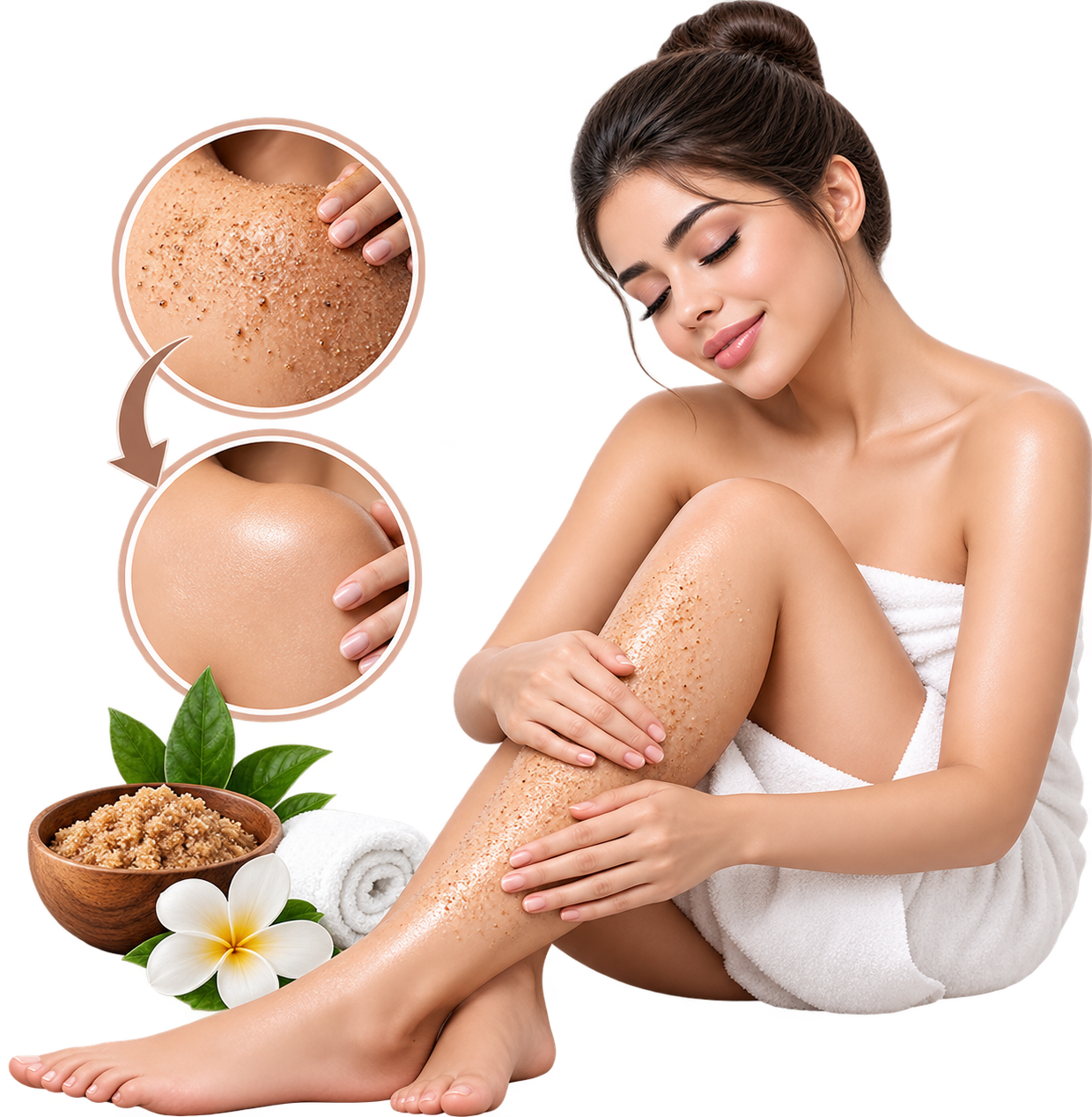
Skin and body polishing treatments are exfoliating procedures designed to remove dead skin cells, unclog pores, and improve skin texture and tone, resulting in smoother, softer, and more radiant skin. These treatments are suitable for various areas of the body, including the face, neck, chest, arms, legs, and back, and can help address concerns such as roughness, dullness, and uneven pigmentation.
Exfoliating Scrubs: Exfoliating scrubs containing abrasive particles such as sugar, salt, or microbeads are used to gently slough off dead skin cells and impurities, revealing fresh, new skin underneath. Exfoliating scrubs are suitable for use on the face and body and help improve skin texture and tone.
Body Scrubs: Body scrubs are specialized exfoliating treatments that use coarse particles such as sea salt, coffee grounds, or pumice to buff away dead skin cells, smooth rough patches, and promote circulation. Body scrubs are often combined with massage techniques to enhance relaxation and rejuvenation.
Chemical Peels: Chemical peels use exfoliating acids such as alpha hydroxy acids (AHAs), beta hydroxy acids (BHAs), or trichloroacetic acid (TCA) to remove dead skin cells, stimulate cell turnover, and promote collagen production. Chemical peels are suitable for use on the face, neck, chest, and hands and help improve skin texture, tone, and clarity.
Microdermabrasion: Microdermabrasion is a non-invasive exfoliation technique that uses a handheld device to gently sand away the outer layer of the skin, revealing fresh, new skin underneath. Microdermabrasion helps improve skin texture, tone, and clarity and can be performed on the face, neck, chest, arms, and hands.
By incorporating regular skin and body polishing treatments into their skincare routine, individuals can maintain healthy, radiant skin and minimize the appearance of imperfections such as roughness, dullness, and uneven pigmentation.
Trusted Care. Proven Expertise. Real Results. Lasting Confidence.?
Board-certified dermatologists specialize in diagnosing and treating the skin, hair, and nails. They have the expertise to tell you whether the change is harmless or requires medical testing.
Acne is a skin condition that occurs when your hair follicles become plugged with oil and dead skin cells. It causes whiteheads, blackheads or pimples. Acne is most common among teenagers, though it affects people of all ages. Effective acne treatments are available, but acne can be persistent.
Hair transplant, or restoration surgery, can make the most of the hair you have left. During a hair transplant procedure, a dermatologist or cosmetic surgeon removes hair from a part of the head that has hair and transplants it to a bald spot. Each patch of hair has one to several hairs (micrografts and minigrafts).
Best Hair Transplant Surgeon in Pune
Best Skin Treatment Doctor in Pune
Aesthetic Physician, Cosmetologist,
Dermatologist & Trichologist
+91 75586 45757 / +91 72496 71880
ankuja.mhaske@gmail.com
Copyright © 2026 Dr. Ankuja Mhaske