
Home > Services > Ear Lobe Repair
Ear Lobe Repair
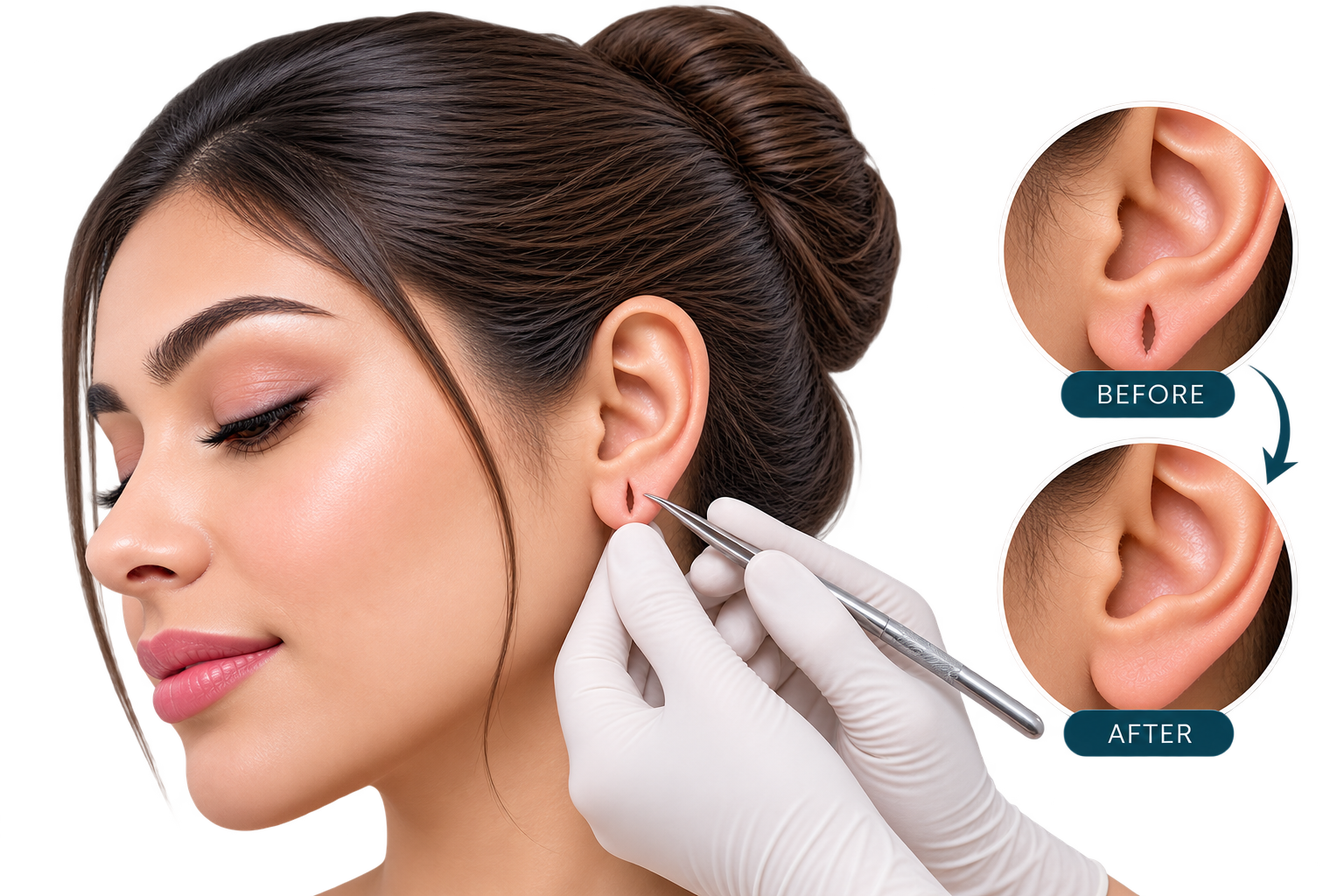
Ear lobe repair is a cosmetic procedure designed to address stretched, torn, or damaged earlobes caused by trauma, prolonged wearing of heavy earrings, or gauging. This procedure restores the natural shape and contour of the earlobe, allowing individuals to wear earrings comfortably and confidently once again.
The ear lobe repair procedure typically involves removing excess tissue or scar tissue from the damaged area and carefully suturing the edges of the earlobe back together. In cases where the lobe has been significantly stretched or elongated, additional techniques such as tissue rearrangement or reconstruction may be necessary to achieve optimal results.
Ear lobe repair is performed on an outpatient basis under local anesthesia, with minimal discomfort and downtime. Most patients can resume their normal activities immediately after the procedure, although it is recommended to avoid strenuous activities and heavy earrings for a few weeks to allow the earlobes to heal properly.
Whether seeking to repair a torn earlobe or restore symmetry to both ears, ear lobe repair offers a safe and effective solution for individuals looking to improve the appearance of their earlobes and enhance their overall aesthetic.
Trusted Care. Proven Expertise. Real Results. Lasting Confidence.?
Board-certified dermatologists specialize in diagnosing and treating the skin, hair, and nails. They have the expertise to tell you whether the change is harmless or requires medical testing.
Acne is a skin condition that occurs when your hair follicles become plugged with oil and dead skin cells. It causes whiteheads, blackheads or pimples. Acne is most common among teenagers, though it affects people of all ages. Effective acne treatments are available, but acne can be persistent.
Hair transplant, or restoration surgery, can make the most of the hair you have left. During a hair transplant procedure, a dermatologist or cosmetic surgeon removes hair from a part of the head that has hair and transplants it to a bald spot. Each patch of hair has one to several hairs (micrografts and minigrafts).
Best Hair Transplant Surgeon in Pune
Best Skin Treatment Doctor in Pune
Aesthetic Physician, Cosmetologist,
Dermatologist & Trichologist
+91 75586 45757 / +91 72496 71880
ankuja.mhaske@gmail.com
Copyright © 2026 Dr. Ankuja Mhaske