Home > Services > Nail Surgery
Nail Surgery
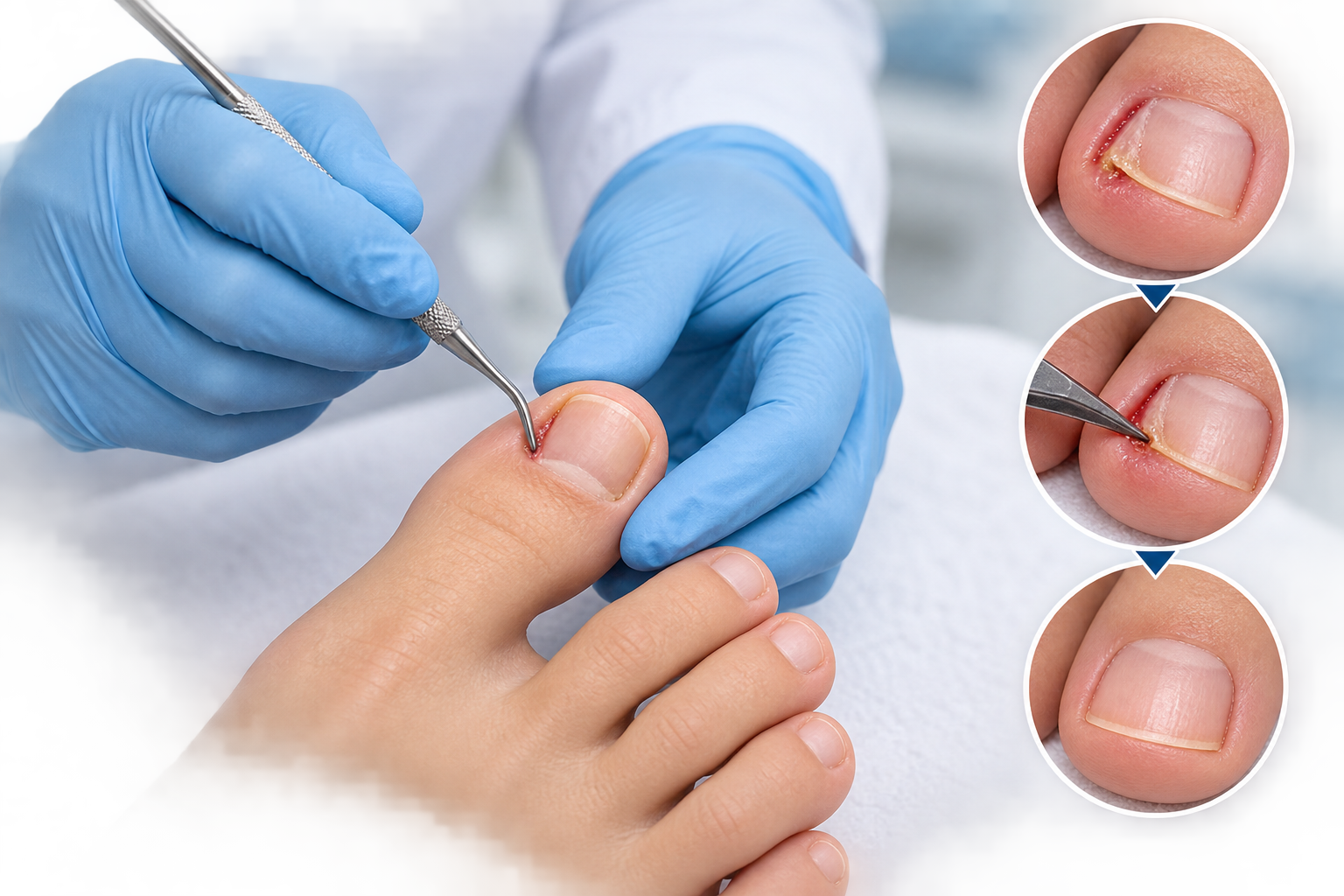
Nail surgery is a specialized procedure used to address a variety of nail disorders and conditions, including ingrown toenails, fungal infections, nail deformities, and chronic nail trauma. Nail surgery may involve partial or complete removal of the affected nail, excision of ingrown nail tissue, or surgical correction of nail deformities.
Ingrown toenails occur when the edge of the nail grows into the surrounding skin, causing pain, inflammation, and infection. In cases of severe or recurrent ingrown toenails, nail surgery may be recommended to remove the offending nail edge and prevent future ingrowth.
Nail surgery for fungal infections involves removing the infected nail tissue and treating the underlying fungal infection with oral or topical antifungal medications. In some cases, surgical debridement or chemical cauterization may be performed to remove thickened or damaged nail tissue and promote healthy nail growth.
Nail surgery may also be performed to correct nail deformities such as pincer nails, spoon nails, or nail dystrophy caused by trauma, injury, or underlying medical conditions. Surgical techniques such as nail avulsion, matrixectomy, or nail reconstruction may be employed to reshape the nail and restore its normal appearance and function.
While nail surgery is generally safe and effective, it is essential to consult with a qualified podiatrist or nail specialist to determine the most appropriate treatment approach for your specific condition. By addressing nail disorders and conditions early and seeking prompt medical attention, individuals can prevent complications and maintain healthy, beautiful nails.
Trusted Care. Proven Expertise. Real Results. Lasting Confidence.?
Board-certified dermatologists specialize in diagnosing and treating the skin, hair, and nails. They have the expertise to tell you whether the change is harmless or requires medical testing.
Acne is a skin condition that occurs when your hair follicles become plugged with oil and dead skin cells. It causes whiteheads, blackheads or pimples. Acne is most common among teenagers, though it affects people of all ages. Effective acne treatments are available, but acne can be persistent.
Hair transplant, or restoration surgery, can make the most of the hair you have left. During a hair transplant procedure, a dermatologist or cosmetic surgeon removes hair from a part of the head that has hair and transplants it to a bald spot. Each patch of hair has one to several hairs (micrografts and minigrafts).
Best Hair Transplant Surgeon in Pune
Best Skin Treatment Doctor in Pune
Aesthetic Physician, Cosmetologist,
Dermatologist & Trichologist
+91 75586 45757 / +91 72496 71880
ankuja.mhaske@gmail.com
Copyright © 2026 Dr. Ankuja Mhaske