Home > Services > Keloid Scar Removal
Keloid Scar Removal
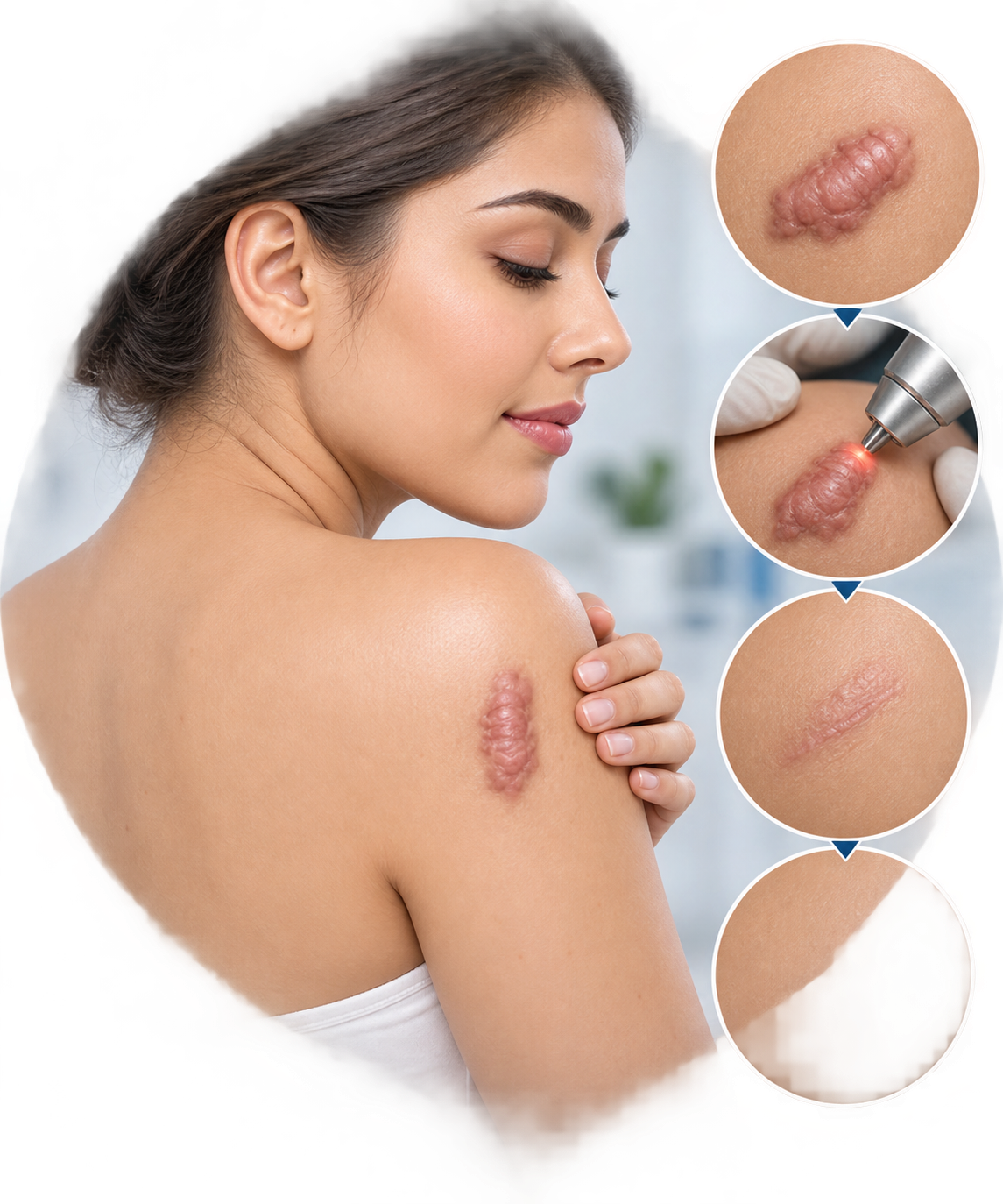
Keloids are raised, overgrown scars that extend beyond the boundaries of the original wound and are characterized by their thick, fibrous texture and tendency to recur after treatment. Keloid scar removal is a procedure used to reduce the size, thickness, and visibility of keloid scars and improve the overall appearance of the skin.
Keloid scar removal may involve a combination of surgical excision, corticosteroid injections, cryotherapy, laser therapy, and silicone gel sheeting to flatten the scar, soften the tissue, and minimize redness and inflammation. In some cases, multiple treatment modalities may be used in combination to achieve optimal results.
Surgical excision of keloid scars involves carefully removing the excess scar tissue and closing the wound with sutures to minimize tension and promote optimal healing. Corticosteroid injections may be administered before or after surgery to reduce inflammation and prevent recurrence of the keloid.
Cryotherapy, or freezing therapy, involves applying liquid nitrogen to the keloid scar to freeze and destroy the abnormal tissue, leading to gradual flattening and improvement in the appearance of the scar. Laser therapy may also be used to target the blood vessels and pigment cells within the keloid, resulting in reduced redness and pigmentation.
Silicone gel sheeting is often recommended as a post-treatment measure to maintain pressure on the scar and prevent it from rising again. These sheets are applied directly to the scar and worn continuously for several weeks to months to improve the texture and color of the scar.
While keloid scar removal can produce significant improvements in the appearance of keloid scars, it is essential to manage expectations and understand that complete eradication of the scar may not be possible. However, with proper treatment and care, many individuals with keloid scars can achieve smoother, less noticeable scars and regain confidence in their appearance.
Trusted Care. Proven Expertise. Real Results. Lasting Confidence.?
Board-certified dermatologists specialize in diagnosing and treating the skin, hair, and nails. They have the expertise to tell you whether the change is harmless or requires medical testing.
Acne is a skin condition that occurs when your hair follicles become plugged with oil and dead skin cells. It causes whiteheads, blackheads or pimples. Acne is most common among teenagers, though it affects people of all ages. Effective acne treatments are available, but acne can be persistent.
Hair transplant, or restoration surgery, can make the most of the hair you have left. During a hair transplant procedure, a dermatologist or cosmetic surgeon removes hair from a part of the head that has hair and transplants it to a bald spot. Each patch of hair has one to several hairs (micrografts and minigrafts).
Best Hair Transplant Surgeon in Pune
Best Skin Treatment Doctor in Pune
Aesthetic Physician, Cosmetologist,
Dermatologist & Trichologist
+91 75586 45757 / +91 72496 71880
ankuja.mhaske@gmail.com
Copyright © 2026 Dr. Ankuja Mhaske