Home > Services > Botox
Botox
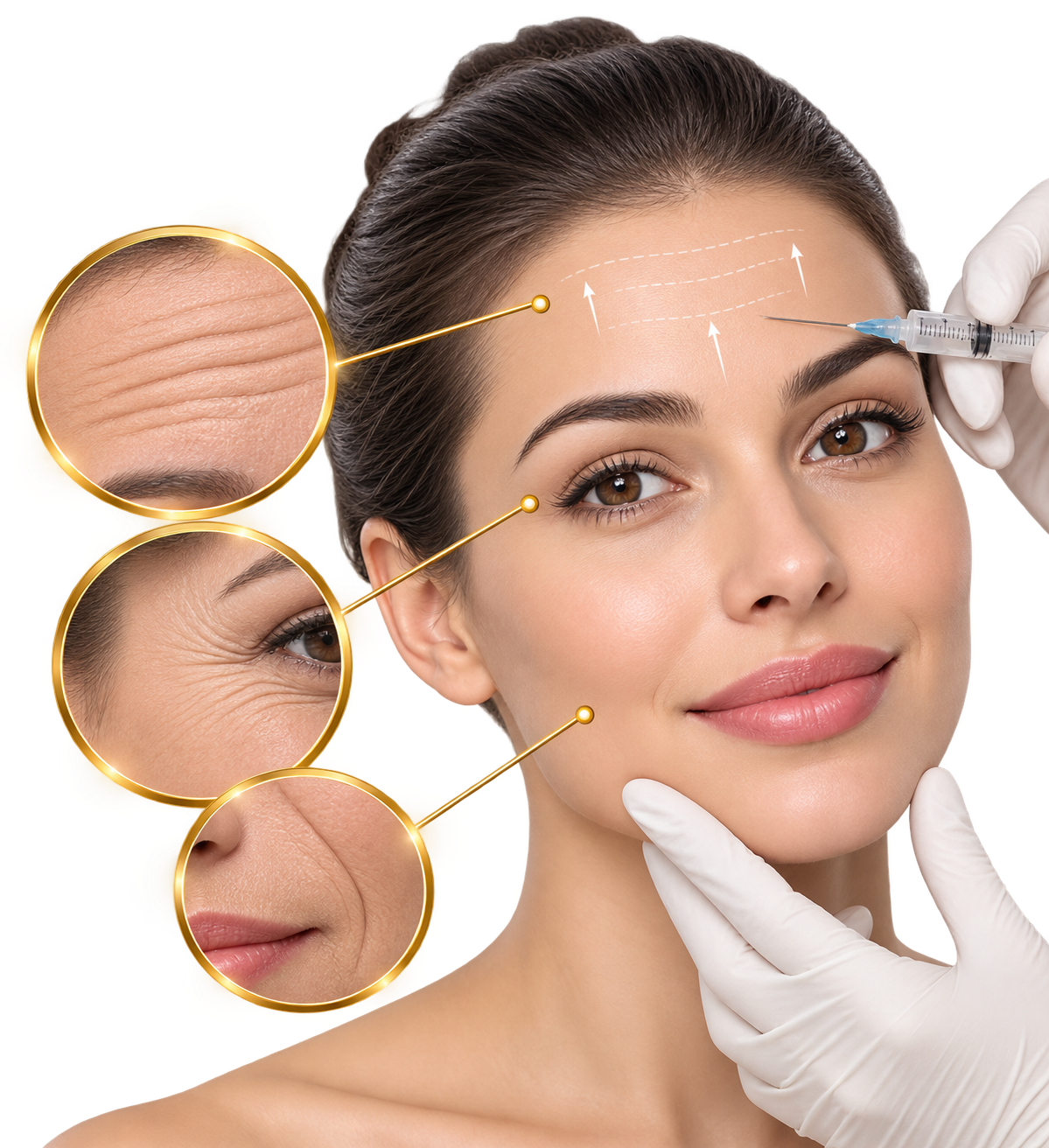
Botox, short for botulinum toxin, is a popular cosmetic treatment used to reduce the appearance of fine lines and wrinkles by temporarily relaxing the underlying muscles that cause them. Botox injections are primarily used to smooth dynamic wrinkles, which are lines that form as a result of repetitive facial expressions, such as frowning or squinting.
During the Botox procedure, a small amount of botulinum toxin is injected directly into targeted facial muscles using a fine needle. The toxin works by blocking the release of acetylcholine, a neurotransmitter that signals muscles to contract. By temporarily inhibiting muscle contractions, Botox helps soften wrinkles and lines, resulting in a smoother, more youthful appearance.
Botox injections are most commonly used to treat wrinkles and lines in the upper face, including frown lines between the eyebrows (glabellar lines), horizontal forehead lines, and crow’s feet around the eyes. The procedure is quick, virtually painless, and requires no downtime, allowing patients to resume their normal activities immediately after treatment.
While the results of Botox injections are temporary and typically last for three to four months, repeated treatments can help maintain a smoother, more youthful appearance over time. With regular maintenance, many patients experience prolonged benefits and may require fewer injections to achieve their desired results.
In addition to its cosmetic uses, Botox is also used to treat medical conditions such as chronic migraines, excessive sweating (hyperhidrosis), and muscle spasms (e.g., cervical dystonia). When performed by a qualified and experienced provider, Botox injections are safe and effective for both cosmetic and therapeutic purposes, helping individuals look and feel their best.
Trusted Care. Proven Expertise. Real Results. Lasting Confidence.?
Board-certified dermatologists specialize in diagnosing and treating the skin, hair, and nails. They have the expertise to tell you whether the change is harmless or requires medical testing.
Acne is a skin condition that occurs when your hair follicles become plugged with oil and dead skin cells. It causes whiteheads, blackheads or pimples. Acne is most common among teenagers, though it affects people of all ages. Effective acne treatments are available, but acne can be persistent.
Hair transplant, or restoration surgery, can make the most of the hair you have left. During a hair transplant procedure, a dermatologist or cosmetic surgeon removes hair from a part of the head that has hair and transplants it to a bald spot. Each patch of hair has one to several hairs (micrografts and minigrafts).
Best Hair Transplant Surgeon in Pune
Best Skin Treatment Doctor in Pune
Aesthetic Physician, Cosmetologist,
Dermatologist & Trichologist
+91 75586 45757 / +91 72496 71880
ankuja.mhaske@gmail.com
Copyright © 2026 Dr. Ankuja Mhaske