
Home > Services > Vitiligo Patches Therapy
Vitiligo Patches Therapy
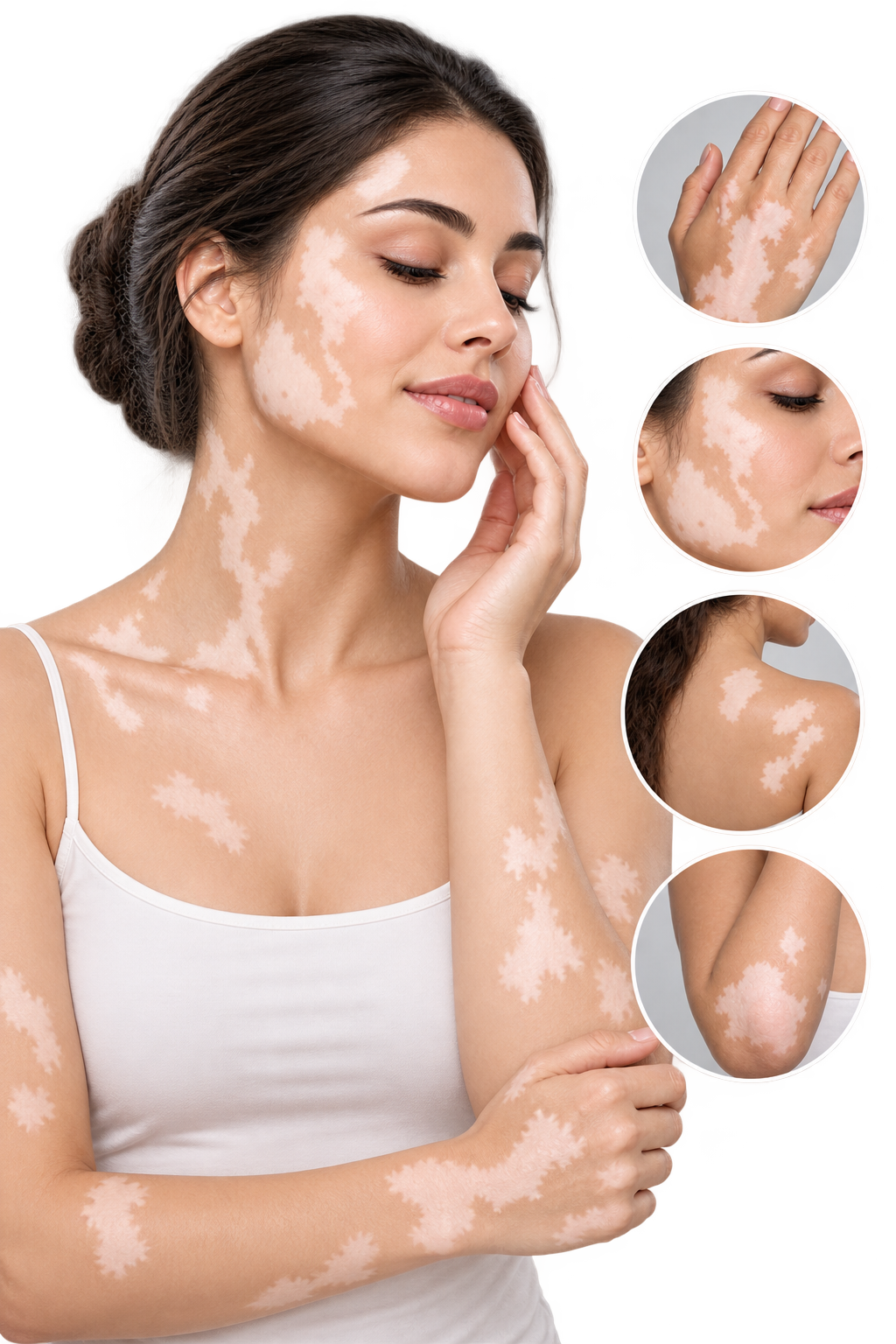
Vitiligo is a chronic skin condition characterized by the loss of pigment-producing cells (melanocytes), resulting in depigmented patches or white spots on the skin. While there is no cure for vitiligo, several treatment options are available to help minimize depigmentation, promote repigmentation, and improve the overall appearance of the skin.
One of the primary treatments for vitiligo patches is topical corticosteroid therapy, which involves applying potent corticosteroid creams or ointments to the affected areas to reduce inflammation and encourage repigmentation. Topical calcineurin inhibitors may also be prescribed to modulate immune activity and promote melanocyte function.
Phototherapy, or light therapy, is another common treatment modality for vitiligo patches, involving exposure to ultraviolet (UV) light to stimulate melanocyte activity and promote repigmentation of the skin. Phototherapy may be administered using narrowband UVB (NB-UVB) or excimer laser devices in controlled sessions under the supervision of a dermatologist.
In cases where topical treatments and phototherapy are ineffective, surgical interventions such as autologous melanocyte transplantation, punch grafting, or suction blister grafting may be considered to transplant healthy melanocytes from unaffected areas of the body to depigmented patches.
In addition to medical treatments, camouflage makeup and cosmetic tattooing techniques such as micropigmentation can help conceal vitiligo patches and improve the cosmetic appearance of the skin, providing individuals with a temporary solution to their pigmentation concerns.
While vitiligo can be challenging to treat, with proper management and care, many individuals with vitiligo can achieve significant improvements in skin pigmentation and overall quality of life. By working closely with a dermatologist or skin specialist, individuals with vitiligo can explore various treatment options and develop a personalized plan to address their specific needs and goals.
Trusted Care. Proven Expertise. Real Results. Lasting Confidence.?
Board-certified dermatologists specialize in diagnosing and treating the skin, hair, and nails. They have the expertise to tell you whether the change is harmless or requires medical testing.
Acne is a skin condition that occurs when your hair follicles become plugged with oil and dead skin cells. It causes whiteheads, blackheads or pimples. Acne is most common among teenagers, though it affects people of all ages. Effective acne treatments are available, but acne can be persistent.
Hair transplant, or restoration surgery, can make the most of the hair you have left. During a hair transplant procedure, a dermatologist or cosmetic surgeon removes hair from a part of the head that has hair and transplants it to a bald spot. Each patch of hair has one to several hairs (micrografts and minigrafts).
Best Hair Transplant Surgeon in Pune
Best Skin Treatment Doctor in Pune
Aesthetic Physician, Cosmetologist,
Dermatologist & Trichologist
+91 75586 45757 / +91 72496 71880
ankuja.mhaske@gmail.com
Copyright © 2026 Dr. Ankuja Mhaske