Home > Services > Low Laser Light Therapy
Low Laser Light Therapy
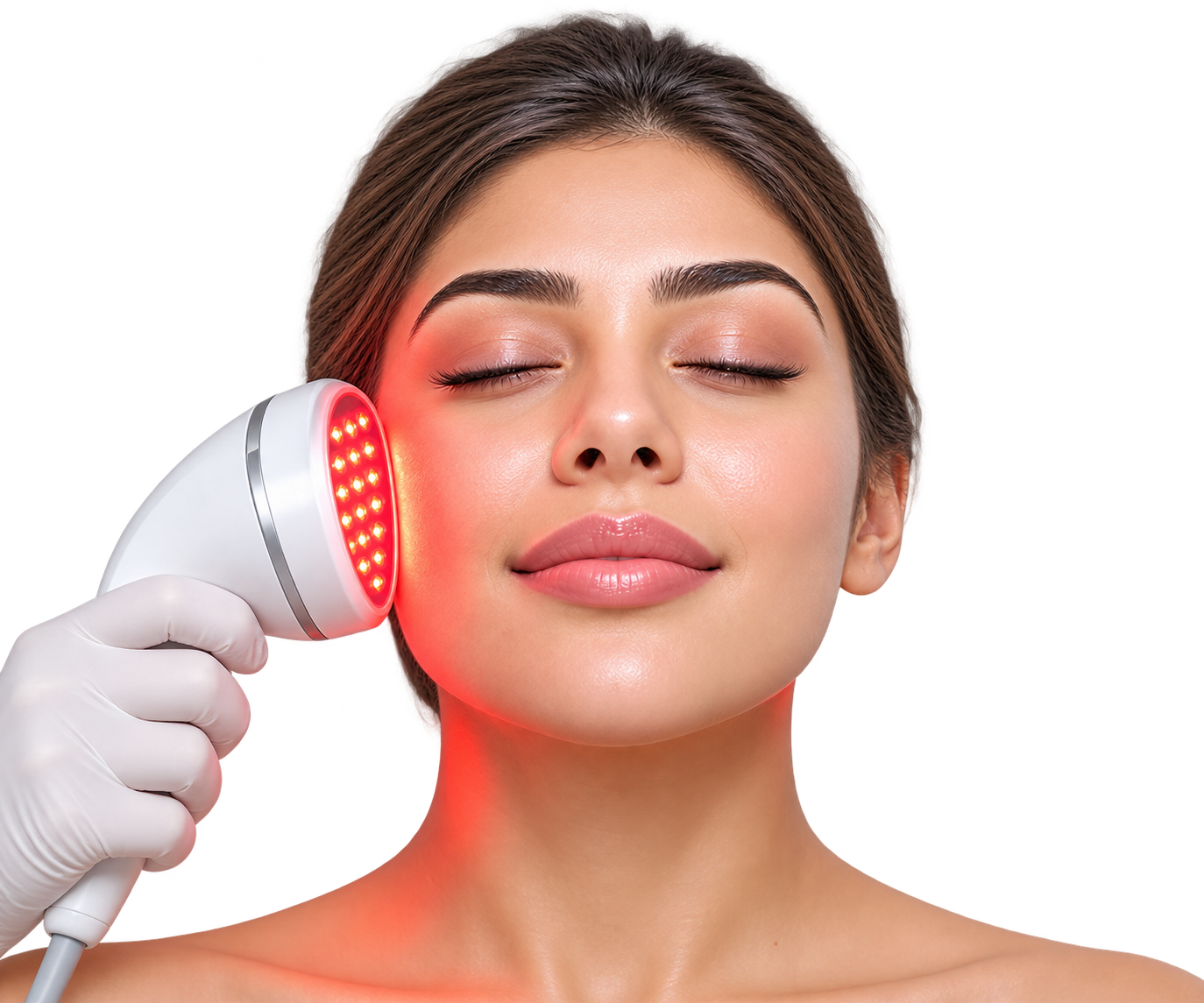
Low-level laser therapy (LLLT), also known as cold laser therapy or photobiomodulation, is a non-invasive treatment that uses low-level laser light to stimulate cellular activity, promote tissue repair, and reduce inflammation. LLLT has various applications in dermatology and skincare, including promoting wound healing, reducing pain and inflammation, and improving skin tone and texture.
Wrinkle Reduction: LLLT can help stimulate collagen production, improve skin elasticity, and reduce the appearance of fine lines and wrinkles, resulting in a smoother, more youthful complexion.
Acne Treatment: LLLT can help reduce inflammation, kill acne-causing bacteria, and promote healing, making it an effective treatment for acne breakouts and reducing the risk of scarring.
Hair Restoration: LLLT can stimulate hair follicles, increase blood flow, and promote hair growth, making it a popular treatment for individuals experiencing hair loss or thinning.
Scar Reduction: LLLT can help promote collagen remodeling, reduce scar tissue formation, and improve the appearance of scars, including acne scars, surgical scars, and stretch marks.
Skin Rejuvenation: LLLT can improve skin tone, texture, and clarity by promoting cellular renewal, enhancing circulation, and boosting collagen production, resulting in a more radiant and youthful complexion.
LLLT treatments are typically performed as in-office procedures by licensed healthcare professionals or skincare specialists. The procedure involves applying a low-level laser device directly to the skin, where it emits gentle pulses of light energy to stimulate cellular activity and promote healing.
LLLT is well-tolerated by most individuals and is generally considered safe when performed by a qualified provider. While results may vary depending on the individual’s skin type, concerns, and treatment regimen, many individuals experience noticeable improvements in skin tone, texture, and overall appearance with regular LLLT treatments.
Trusted Care. Proven Expertise. Real Results. Lasting Confidence.?
Board-certified dermatologists specialize in diagnosing and treating the skin, hair, and nails. They have the expertise to tell you whether the change is harmless or requires medical testing.
Acne is a skin condition that occurs when your hair follicles become plugged with oil and dead skin cells. It causes whiteheads, blackheads or pimples. Acne is most common among teenagers, though it affects people of all ages. Effective acne treatments are available, but acne can be persistent.
Hair transplant, or restoration surgery, can make the most of the hair you have left. During a hair transplant procedure, a dermatologist or cosmetic surgeon removes hair from a part of the head that has hair and transplants it to a bald spot. Each patch of hair has one to several hairs (micrografts and minigrafts).
Best Hair Transplant Surgeon in Pune
Best Skin Treatment Doctor in Pune
Aesthetic Physician, Cosmetologist,
Dermatologist & Trichologist
+91 75586 45757 / +91 72496 71880
ankuja.mhaske@gmail.com
Copyright © 2026 Dr. Ankuja Mhaske