
Home  >  Services  > Double Chin Treatment

Double Chin Treatment
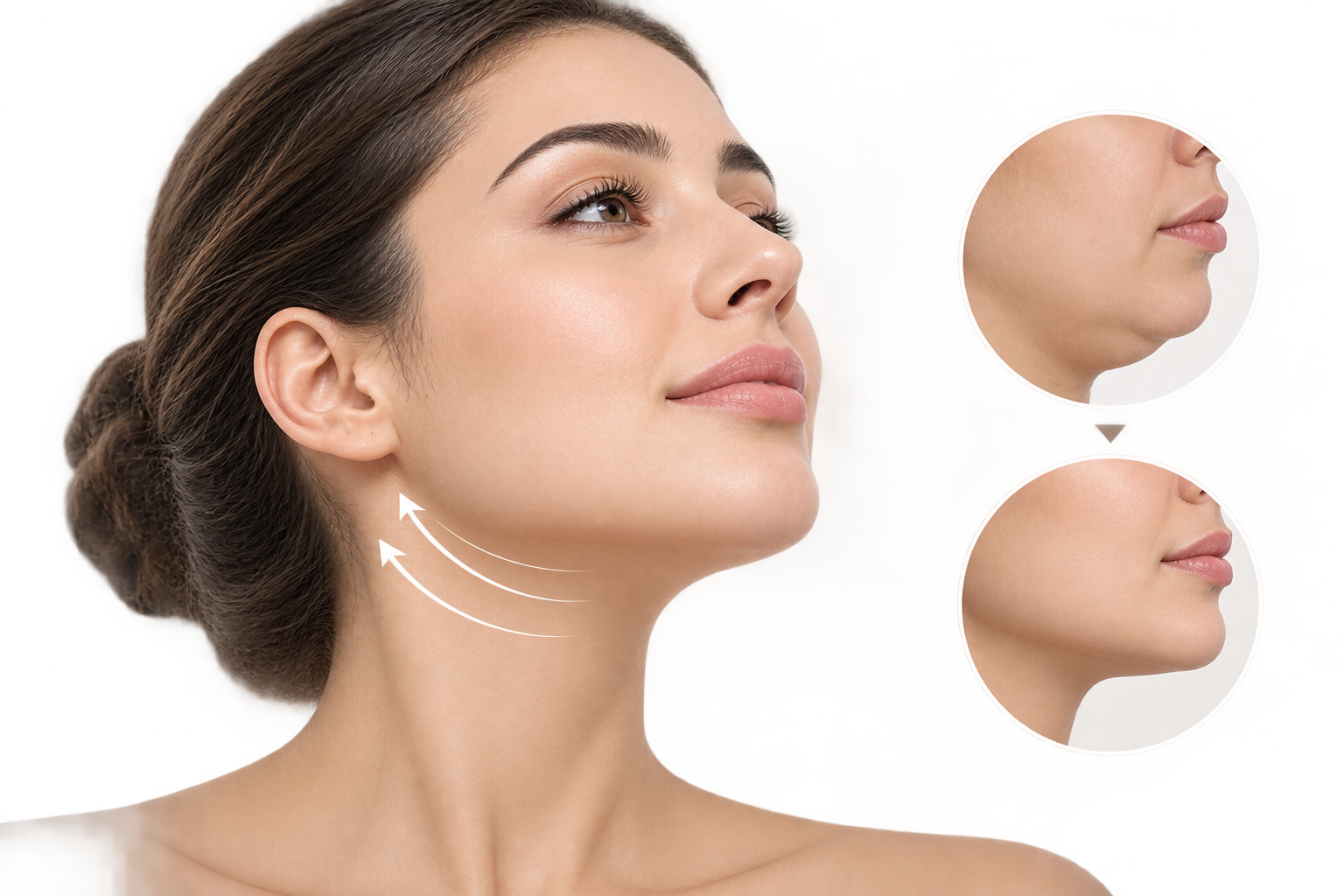
Say Goodbye To A Double Chin And Hello To A Defined Profile.

Double chin treatment focuses on reducing excess fat and tightening the skin in the submental area (under the chin) to improve jawline contour and reduce the appearance of a double chin. A double chin, also known as submental fullness, can be caused by factors such as genetics, aging, weight gain, and loss of skin elasticity.

Common double chin treatments may include:

  1. Injectable Treatments: Injectable treatments such as Kybella (deoxycholic acid) or fat-dissolving injections may be used to permanently destroy fat cells in the submental area, resulting in a slimmer, more defined jawline over time.
  2. Non-Surgical Procedures: Non-invasive procedures such as CoolSculpting (cryolipolysis) or radiofrequency (RF) energy treatments may be used to reduce localized fat deposits under the chin and tighten loose skin, resulting in a smoother, more contoured appearance.
  3. Ultherapy: Ultherapy is a non-invasive skin tightening treatment that uses focused ultrasound energy to stimulate collagen production and tighten sagging skin in the submental area, resulting in a more lifted and youthful jawline contour.
  4. Liposuction: Surgical liposuction may be recommended for individuals with larger or more stubborn fat deposits under the chin who desire more immediate and dramatic results. Liposuction involves removing excess fat through small incisions using a suction device.
  5. Lifestyle Modifications: Adopting a healthy diet, maintaining a stable weight, exercising regularly, staying hydrated, and avoiding habits such as smoking can help prevent or reduce the accumulation of fat under the chin and improve overall jawline contour.

FAQ

Trusted Care. Proven Expertise. Real Results. Lasting Confidence.?

Board-certified dermatologists specialize in diagnosing and treating the skin, hair, and nails. They have the expertise to tell you whether the change is harmless or requires medical testing.

Acne is a skin condition that occurs when your hair follicles become plugged with oil and dead skin cells. It causes whiteheads, blackheads or pimples. Acne is most common among teenagers, though it affects people of all ages. Effective acne treatments are available, but acne can be persistent.

Hair transplant, or restoration surgery, can make the most of the hair you have left. During a hair transplant procedure, a dermatologist or cosmetic surgeon removes hair from a part of the head that has hair and transplants it to a bald spot. Each patch of hair has one to several hairs (micrografts and minigrafts).

Pull hair at both ends to increase tension slightly, then stop pulling to decrease tension. If the hair doesn’t snap or break easily when you pull it tight and if it regains its shape, it has some healthy elasticity and strength.
 
A variety of conditions can cause permanent or temporary hair loss, including hormonal changes due to pregnancy, childbirth, menopause and thyroid problems.
As part of a complete early detection strategy, we recommend that you see a dermatologist once a year, or more often if you are at a higher risk of skin cancer, for a full-body, professional skin exam. To help you prepare and make the most of your appointment, follow these five simple steps.